

Ultralight Backpacking on a Budget: How I Built a Sub-10-Pound Kit for Under $1,500
Let me guess — you’ve been scrolling through ultralight backpacking forums, watching your jaw drop at $400 shelters, $300 packs, and $500 quilts. You’ve seen those gear lists where the total cost rivals a used car payment. And you’re thinking: I just want to carry less weight on trail. Do I really need to spend $5,000 to do it?
No. You absolutely do not.
I built my first sub-10-pound base weight kit for under $1,500. My second iteration came in under $1,000. And honestly? Some of my favorite pieces of gear are the cheap ones — the cat food can stove I made in my garage, the thrift store merino wool shirt that’s outlasted two “premium” base layers, the $40 tarp that’s kept me dry through thunderstorms in the Smokies.
Ultralight backpacking on a budget isn’t about deprivation. It’s about being smart with your money and ruthless with your priorities. This guide breaks down exactly how to shed pounds from your pack without emptying your bank account — with real products, real weights, and real prices.
What Counts as Ultralight?
Before we start shopping, let’s define our terms. The backpacking community generally breaks down pack weight into four categories based on base weight — that’s everything in your pack except consumables like food, water, and fuel:
- Traditional Backpacking: Base weight over 20 pounds. This is your standard REI starter kit territory.
- Lightweight: Base weight between 10–15 pounds. A significant improvement that most hikers can achieve with smart gear choices.
- Ultralight (UL): Base weight under 10 pounds. The sweet spot where every ounce gets scrutinized.
- Super Ultralight (SUL): Base weight under 5 pounds. The realm of gram-counting extremists and MYOG wizards. Not our target today.
Our goal is simple: get your base weight under 10 pounds without spending a fortune. That’s the budget ultralight backpacking sweet spot — light enough to transform your hiking experience, affordable enough that you don’t need a second mortgage.
The Biggest Weight Savings: Start with the Big 3
Here’s the secret that experienced ultralight hikers know: roughly 60–70% of your base weight comes from just three items — your shelter, your pack, and your sleep system. These are the Big 3, and they’re where budget ultralight backpacking either succeeds or fails.
A traditional Big 3 setup might weigh 12–15 pounds on its own. A budget ultralight Big 3 can come in at 4–6 pounds. That single change can take you from traditional territory straight into ultralight range.
Don’t waste time agonizing over whether your toothbrush handle is too heavy. Start here.
The Priority Order
- Shelter — The easiest place to save 2–4 pounds
- Pack — Lighter shelter and sleep system means you can carry a lighter, frameless or minimal-frame pack
- Sleep System — Quilts beat mummy bags for weight and cost
Let’s break each one down with specific budget-friendly options.
Budget Ultralight Shelter Options ($50–$200)
Your shelter offers the single biggest opportunity for weight savings. A typical 2-person backpacking tent weighs 4–6 pounds. These budget ultralight shelters weigh 1–2 pounds.
Tarps ($30–$80)
The cheapest path to ultralight shelter is a flat tarp. A simple silnylon or silpoly tarp in a 7×9 or 8×10 size weighs 10–16 ounces and costs as little as $30–$80. The Borah Gear Silnylon Flat Tarp (5.5×9) weighs just 7.5 ounces and runs about $65. Pair it with a bivy or just bug netting in summer, and you’ve got a complete shelter system under a pound.
The tradeoff? Tarps require a learning curve. You’ll need to practice your pitch setups, and they offer less weather protection than enclosed shelters. But for three-season use in moderate climates, they’re unbeatable on the weight-to-dollar ratio.
Budget Ultralight Tents ($100–$200)
If you want walls and a floor without the cottage industry price tag, these options deliver:
- 3F UL Gear Lanshan 1 — 28 oz, around $90. This single-wall trekking pole tent has become the go-to budget ultralight shelter. It’s not DCF, but it works. Thousands of thru-hikers have proven it on the AT and PCT.
- Paria Outdoor Products Bryce 1P — 42 oz, about $130. A double-wall tent at an incredible price. Heavier than the Lanshan but better ventilation and weather protection.
- Gossamer Gear The One — 18 oz, around $200. At the top of our budget range, this single-wall shelter is genuinely ultralight at barely over a pound. Uses a single trekking pole for setup.
Budget Ultralight Packs ($80–$200)
Here’s the counterintuitive truth about ultralight packs: once your total load drops below 20 pounds (including food and water), you don’t need a beefy suspension system. That means lighter, simpler, and cheaper packs become viable.
- Granite Gear Crown2 38 — 38 oz, about $110. This is arguably the best value in ultralight backpacking. It has a removable frame sheet, hipbelt, and enough structure for loads up to 30 pounds. Remove the frame sheet and lid, and it drops to around 28 oz.
- REI Flash 55 — 34 oz, around $130 (watch for REI member sales). Solid suspension, good organization, competitive weight.
- ULA Circuit — 39 oz, about $185. A beloved thru-hiking pack with great durability and a comfortable carry. The price reflects its quality.
- Gossamer Gear Mariposa 60 — 26 oz, around $200. If you can stretch to the top of the budget, this pack offers remarkable weight savings with a comfortable carry for loads up to 25 pounds.
Pro tip: check r/ULgeartrade, r/GearTrade, and Facebook gear swap groups. Used ultralight packs in good condition regularly sell for 40–60% of retail.
Budget Sleep Systems
The traditional mummy sleeping bag is heavy, bulky, and often more expensive than the ultralight alternative: a quilt.
Why Quilts Win on Budget and Weight
A quilt eliminates the insulation underneath you (which gets compressed and useless anyway — your sleeping pad does the insulating). This saves 8–16 ounces and typically $50–$100 compared to an equivalent-temperature mummy bag. Most budget ultralight hikers switch to quilts and never look back.
Budget Quilt Options
- Hammock Gear Econ Burrow 20°F — 24 oz, about $160. The gold standard for affordable ultralight quilts. Uses 800-fill-power down at a price point that seems almost too good. Regular width works for most people.
- Paria Outdoor Products Thermodown 15°F — 30 oz, around $110. Heavier than the Hammock Gear but significantly cheaper. Solid three-season option.
- Aegismax Wind Hard Tiny — 18 oz (40°F), about $55. For summer-only use, this ultra-affordable quilt is hard to beat. Don’t trust it below 50°F actual temperatures.
Budget Sleeping Pads
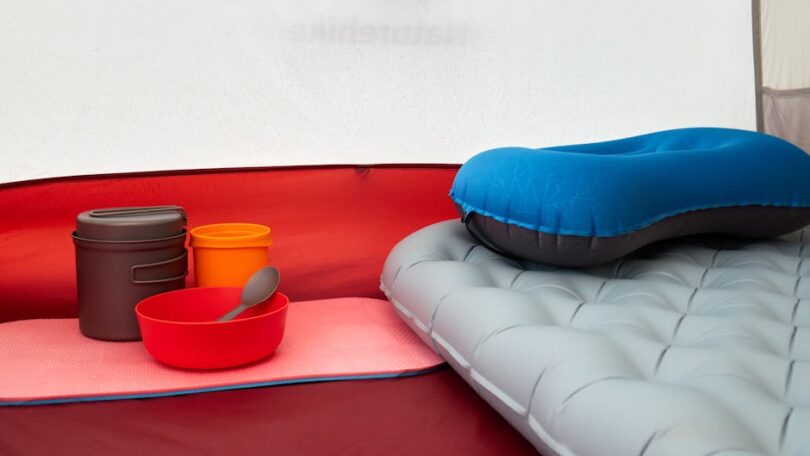
- Nemo Switchback (short) — 10 oz, about $40. A closed-cell foam pad that’s nearly indestructible. R-value of 2.0 works for summer. No inflation needed, no puncture anxiety.
- Klymit Static V — 18 oz, around $50. An inflatable pad with decent insulation (R-value 4.4 for the Insulated version) at a fraction of the Therm-a-Rest NeoAir price.
DIY Ultralight Gear: The Cheapest Ounces You’ll Ever Save
Some of the lightest gear you’ll ever carry costs almost nothing — because you make it yourself. DIY ultralight gear is a proud tradition in the UL community, and these projects require zero sewing skills.
Cat Can Alcohol Stove (Cost: $0 | Weight: 1 oz)
Take a Fancy Feast cat food can. Punch holes around the rim with a hole punch. Congratulations, you have a stove that boils water in 5–6 minutes using denatured alcohol. Pair it with a small windscreen made from a disposable aluminum baking pan, and your entire cook system weighs under 3 ounces. Total cost? Basically free.
Tyvek Ground Sheet (Cost: $5–$10 | Weight: 2–3 oz)
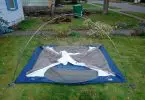
Skip the $40 purpose-built footprints. Get a piece of Tyvek house wrap from a construction site (ask nicely — they’ll usually give you scraps) or order a sheet online. Cut it to your shelter’s dimensions. It’s waterproof, incredibly tough, and weighs almost nothing.
MYOG Stuff Sacks (Cost: $2–$5 | Weight: 0.3 oz each)
Buy ripstop nylon from a fabric store, cut rectangles, sew straight seams, add a drawstring. Even if you’ve never sewn before, stuff sacks are a 20-minute project. Make them from DCF scraps if you can find them on r/myog.
Other Quick DIY Wins
- Duct tape repairs: Wrap a length around your trekking pole instead of carrying a roll (0 oz added)
- Mini toiletry kit: Repackage everything into tiny containers from the travel section at the dollar store
- Stake bag: Cut the finger off a rubber kitchen glove. Weighs nothing, keeps stakes contained.
Clothing Strategies: A Layering System Under $200
Clothing is where budget ultralight backpacking gets creative. The goal is a versatile layering system that handles everything from hot afternoon hiking to cold, wet camp evenings — without carrying redundant pieces.
The Budget UL Clothing System
- Base Layer: Check thrift stores for merino wool shirts. Brands like Smartwool and Icebreaker show up regularly at Goodwill for $5–$15. One long-sleeve merino top covers you from hiking layer to sleep shirt.
- Insulation: The Decathlon Forclaz Trek 100 down jacket weighs about 10 oz and costs $50–$60. It’s not a premium piece, but it punches above its weight class. Alternatively, the Amazon Essentials Packable Puffer runs about $30 and weighs 12 oz.
- Rain Jacket: The Frogg Toggs UltraLite2 weighs 5.5 oz and costs $20. Yes, twenty dollars. It’s not durable — plan to replace it every season or two. But at that price and weight, it’s a budget ultralight icon.
- Hiking Shorts/Pants: Running shorts from Target or Walmart ($10–$15) work perfectly. For pants, the Wrangler ATG Synthetic Pants are about $25 and dry fast.
- Socks: Darn Tough merino socks ($20–$25) are worth paying full price. They last forever and the lifetime warranty is real.
Total clothing system: approximately $130–$170 and 30–40 ounces.
What NOT to Cut: Where Weight Savings Aren’t Worth It
Budget ultralight backpacking is about being smart, not reckless. There are items where saving weight or money crosses the line from clever into dangerous. Never cut these:
- Water treatment: Always carry a reliable method. The Sawyer Squeeze (3 oz, $30) is lightweight, effective, and non-negotiable. Waterborne illness will ruin more than your trip.
- Navigation: A charged phone with downloaded maps, plus a basic paper map and mini compass as backup. Getting lost in the backcountry is not an ultralight flex.
- First aid kit: A small, well-curated kit weighing 3–5 ounces. Include blister treatment (Leukotape), pain relief, antihistamines, and any personal medications. You can trim the kit, but don’t eliminate it.
- Sun protection: Sunscreen and sunglasses. Sunburn at altitude is no joke and can end a trip.
- Emergency shelter: If your primary shelter is a tarp or minimal setup, carry an emergency bivy or space blanket (2 oz). If conditions deteriorate beyond what your setup can handle, this is your insurance policy.
- Adequate insulation: Don’t bring a 40°F quilt to shoulder season because it’s lighter. Hypothermia doesn’t care about your base weight number.
The whole point of going ultralight is to enjoy hiking more. Cutting safety items defeats that purpose entirely.
Sample Budget Ultralight Gear List
Here’s a complete, trail-tested budget ultralight gear list proving you can hit sub-10-pound base weight for under $1,500:
| Category | Item | Weight (oz) | Price |
|---|---|---|---|
| Shelter | 3F UL Gear Lanshan 1 | 28 | $90 |
| Pack | Granite Gear Crown2 38 (stripped) | 30 | $110 |
| Sleep – Quilt | Hammock Gear Econ Burrow 20°F | 24 | $160 |
| Sleep – Pad | Nemo Switchback (short) | 10 | $40 |
| Cook – Stove | DIY Cat Can Alcohol Stove | 1 | $0 |
| Cook – Pot | TOAKS 550ml Titanium Pot | 2.8 | $25 |
| Cook – Utensil | Long-handle titanium spoon | 0.6 | $10 |
| Water | Sawyer Squeeze + CNOC Vecto 2L | 4.5 | $45 |
| Clothing – Insulation | Decathlon Forclaz Trek 100 Down Jacket | 10 | $55 |
| Clothing – Rain | Frogg Toggs UltraLite2 | 5.5 | $20 |
| Clothing – Base Layer | Thrift Store Merino Long Sleeve | 7 | $10 |
| Clothing – Bottoms | Running Shorts | 4 | $12 |
| Clothing – Socks | Darn Tough Micro Crew (1 pair worn, 1 spare) | 5 | $46 |
| Lighting | Nitecore NU25 UL Headlamp | 1.1 | $36 |
| Navigation | Phone + mini compass | 7 | $5 |
| Hygiene / First Aid | Custom mini kit | 4 | $25 |
| Ground Sheet | Tyvek (DIY cut) | 2.5 | $5 |
| Stuff Sacks / Misc | MYOG stuff sacks, cord, stakes | 5 | $15 |
| TOTAL BASE WEIGHT | 152 oz (9.5 lb) | $709 | |
9.5 pounds. $709. That’s a legitimate ultralight base weight for the price of a single cottage industry shelter. Even if you add $200 for trekking poles and trail runners (which most hikers already own), you’re well under $1,000 total.
Want to go even lighter? Swap the Lanshan for a flat tarp and bivy combo, drop the pot for cold soaking, and switch to a frameless pack. You’ll be flirting with 7 pounds for under $600.
Frequently Asked Questions
Is ultralight backpacking safe on a budget?
Yes, as long as you don’t cut corners on safety essentials. Budget ultralight backpacking is about choosing lighter alternatives for non-critical items — a tarp instead of a heavy tent, a quilt instead of a bulky sleeping bag. Never sacrifice water treatment, navigation, first aid, or adequate insulation to save money or weight. The gear recommendations in this guide are all trail-proven by thousands of hikers.
How much does a full ultralight backpacking setup cost?
A complete budget ultralight kit with a sub-10-pound base weight can be built for $700–$1,500 depending on your choices. The sample gear list above totals $709. If you opt for slightly higher-end options like the Gossamer Gear Mariposa pack and The One shelter, you’ll be closer to $1,200–$1,500. Compare that to premium cottage industry setups that routinely exceed $3,000–$5,000.
What’s the single best upgrade for reducing pack weight?
Replace your shelter. It’s almost always the single heaviest item in a traditional pack, and the weight difference is dramatic. Going from a 5-pound tent to a 2-pound ultralight option saves 3 pounds in one move. No other single swap comes close to that impact, and affordable ultralight shelters like the Lanshan 1 make it accessible to any budget.
Are cheap ultralight gear options durable enough for thru-hiking?
Many of them are. The Granite Gear Crown2 and Hammock Gear Econ quilts have been carried on full AT and PCT thru-hikes. The Lanshan 1 has completed thousands of trail miles. The Frogg Toggs rain jacket is the exception — it’s genuinely disposable and will need replacing every 500–1,000 miles. But at $20, buying two or three over a thru-hike is still cheaper than one premium rain jacket.
Should I buy budget gear new or look for used ultralight gear?
Both. For items where fit and condition matter — packs and sleep systems — buying used from trusted communities like r/ULgeartrade or Facebook backpacking gear swap groups can save 40–60% off retail. For shelters, buying new gives you confidence in waterproofing integrity. For clothing, thrift stores are goldmines for merino wool base layers. A mixed strategy of new budget gear and used higher-end gear often yields the best weight-to-dollar ratio.
Featured Image Source: Pexels