

Best Lightweight Backpacks Under $200: Budget Packs That Actually Perform
Here’s a dirty secret the gear industry doesn’t want you to know: you don’t need to spend $300, $400, or even $500 on a backpacking pack. I’ve hiked over 4,000 miles with packs ranging from a $45 army surplus ruck to a $600 custom-fitted ultralight wonder, and I can tell you with absolute confidence that the best budget backpacks available today would have been considered premium gear a decade ago.
The backpacking pack market has undergone a quiet revolution. Materials science has driven costs down while improving durability. Suspension designs that were once exclusive to flagship models have trickled down to mid-range offerings. And competition from cottage manufacturers has forced the big brands to pack more features into their affordable lines. The result? You can now get a legitimately excellent pack — one that carries well, weighs under three pounds, and won’t fall apart on a thru-hike — for well under $200.
I’ve tested dozens of affordable hiking backpacks over the past several seasons, hauling them through the Whites, across desert stretches of the PCT, and up and down the Appalachian Trail’s rocky spine. These five packs represent the best budget backpacks you can buy right now — each one a legitimate performer that punches well above its price tag.
Quick Comparison: Best Backpacks Under $200
| Pack | Weight | Capacity | Frame Type | Price | Best For |
|---|---|---|---|---|---|
| REI Flash 55 | 2 lbs 6 oz | 55L | Internal framesheet | $179 | All-around performance |
| Granite Gear Crown2 60 | 2 lbs 5 oz | 60L | HDPE framesheet | $160 | Ultralight on a budget |
| Osprey Exos 58 | 2 lbs 8 oz | 58L | LightWire alloy frame | $190 | Comfort and ventilation |
| Gregory Focal 48 | 2 lbs 14 oz | 48L | Internal alloy frame | $150 | Feature-rich value |
| ULA CDT | 1 lb 9 oz | 54L | Frameless | $135 | Experienced UL hikers |
In-Depth Reviews
Top Pick: REI Flash 55 — The Best All-Around Budget Backpack
The REI Flash 55 is the pack I recommend more than any other to hikers who ask me what lightweight backpacking pack they should buy without breaking the bank. At 2 pounds 6 ounces and $179, it sits at a remarkable sweet spot of weight, comfort, features, and price that no other pack in this range quite matches.
REI redesigned the Flash line from the ground up, and the improvements show on the trail. The ventilated back panel uses a tensioned mesh system that creates a noticeable gap between the pack body and your back — a feature you typically see in packs costing $80 or more above this price point. On a humid July section of the Long Trail, my back stayed noticeably drier than it had with my previous pack.
The hipbelt is generously padded and transfers weight effectively, and the pack carries loads up to 30 pounds with confidence. The removable top lid converts to a summit daypack, and there’s a front stretch pocket large enough for a wet tent or rain jacket. Torso sizes run from 15 to 21 inches across the three available sizes.
Pros:
- Exceptional ventilated back panel for the price
- Comfortable carry up to 30 lbs
- Convertible top lid doubles as daypack
- REI’s excellent return policy provides peace of mind
- Clean, functional pocket layout
Cons:
- 100D Robic nylon is durable but not bombproof — watch it around granite scrambles
- Hipbelt pockets are slightly small for larger phones
- Only available through REI
Specs: 55L capacity | 2 lbs 6 oz | Torso fit: 15–21 in | 100D Robic nylon | $179
Best Ultralight Budget: Granite Gear Crown2 60 — Lightest in Its Class
The Granite Gear Crown2 60 has been a budget ultralight legend for years, and for good reason. At 2 pounds 5 ounces with a full 60 liters of volume, it offers one of the best weight-to-capacity ratios of any framed pack on the market — at any price. For $160, you’re getting a pack that weighs less than many $350 competitors.
Granite Gear achieves this through smart material choices rather than by stripping away useful features. The HDPE framesheet provides structure without the weight of an aluminum stay, and the Vapor Current hipbelt is comfortable enough for long days, though it doesn’t carry heavy loads as well as the REI Flash or Osprey Exos. I’d keep the Crown2 60 under 25 pounds for the most comfortable experience.
Where this pack truly shines is on long-distance trails where every ounce counts but you still want the structure and organization of a framed pack. I’ve seen more Crown2s on the PCT and AT than just about any other budget ultralight pack, and the hikers carrying them are almost universally happy with their choice.
Pros:
- Outstanding weight-to-volume ratio
- Roll-top closure adds versatility for varying load sizes
- Lid can be removed to save 3.5 oz
- Durable 100D and 210D Robic nylon construction
- Large mesh water bottle pockets are accessible on the move
Cons:
- Comfort drops noticeably above 25 lbs
- Back panel ventilation is minimal
- Hipbelt padding is thin compared to competitors
Specs: 60L capacity | 2 lbs 5 oz | Torso fit: 15–21 in | 100D/210D Robic nylon | $160
Best for Beginners: Osprey Exos 58 — Comfort You Can Trust
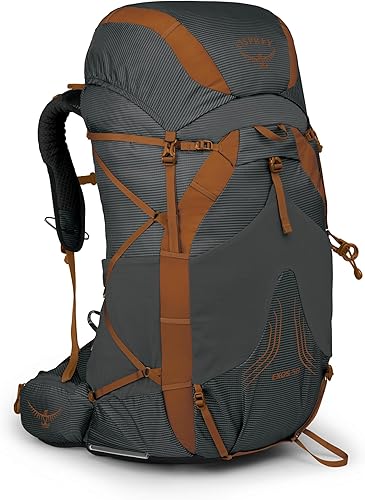
If you’re buying your first serious backpacking pack and you want something that carries like a dream right out of the box, the Osprey Exos 58 is the one. At $190, it’s the most expensive pack on this list, but the LightWire alloy frame and AirSpeed suspended mesh back panel deliver a level of carrying comfort that genuinely rivals packs twice the price.
The Exos has been a staple of the lightweight backpacking world for years, and Osprey keeps refining it without losing what makes it great. The trampoline-style back panel creates the best ventilation of any pack on this list — maybe of any pack under $250. On hot-weather hikes, you can literally feel the breeze moving through the gap between the mesh and the pack body.
At 2 pounds 8 ounces, it’s the heaviest pack here, but those extra ounces go directly into the suspension system. The Exos carries 30-plus pounds with the kind of stability and comfort that inspires confidence in new hikers. And Osprey’s All Mighty Guarantee means if anything goes wrong, they’ll repair or replace it.
Pros:
- Best-in-class back ventilation and carrying comfort
- LightWire frame handles heavy loads gracefully
- Osprey’s lifetime guarantee is industry-leading
- Stow-on-the-Go trekking pole attachment
- Excellent fit range with multiple sizes
Cons:
- Heaviest pack on this list at 2 lbs 8 oz
- Limited pocket organization compared to the Gregory Focal
- The mesh back panel can feel spongy under very heavy loads
Specs: 58L capacity | 2 lbs 8 oz | Torso fit: 16–21 in | 100D nylon | $190
Best Value: Gregory Focal 48 — Feature-Rich and Affordable
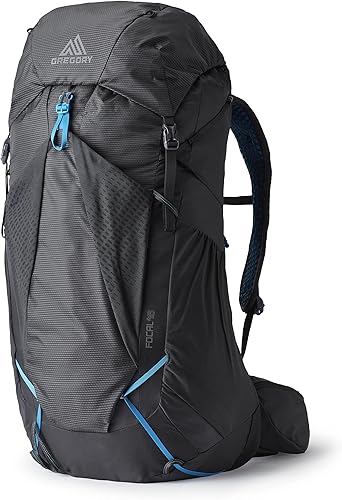
At $150, the Gregory Focal 48 offers the most features per dollar of any pack on this list. Gregory has packed this thing with organizational touches and comfort details that you simply don’t expect at this price: a dedicated sleeping bag compartment with zippered divider, a rain cover included in a built-in pocket, dual zippered hipbelt pockets, and front and side compression straps that actually work well.
The 48-liter capacity might seem small compared to the 55-60L packs above, but for three-season trips with a reasonably dialed kit, it’s plenty. The internal alloy frame and FreeFloat suspension handle loads up to 35 pounds comfortably — the best load-bearing performance here, despite the lower price. At 2 pounds 14 ounces, you’re paying for that capability in weight, but if carrying comfort matters more to you than pack weight, the Focal delivers.
This is the cheap backpacking backpack I recommend to hikers who do a lot of weekend trips and want a pack that’s ready to go without fussing with organization. Everything has a place, and the design feels intuitive from the first use.
Pros:
- Lowest price on this list at $150
- Included rain cover saves an additional $30-40 purchase
- Sleeping bag compartment with divider
- Carries heavier loads better than packs costing more
- Most intuitive pocket layout for organization
Cons:
- Heaviest pack here at 2 lbs 14 oz
- 48L may be tight for winter trips or bulkier gear
- Back ventilation is adequate but not exceptional
Specs: 48L capacity | 2 lbs 14 oz | Torso fit: 16–20 in | 210D nylon | $150
Best Frameless Option: ULA CDT — For the Experienced Ultralight Hiker
The ULA CDT is a different animal than the other packs on this list, and that’s intentional. At just 1 pound 9 ounces and $135, it’s the lightest and cheapest pack here — but it demands more from you as a hiker. This is a frameless pack designed for experienced ultralight backpackers who have already dialed in their base weight to under 12 pounds and know how to pack efficiently.
ULA is a cottage manufacturer based in Utah, and the CDT reflects that ethos: simple, purposeful, and made by people who actually hike. The Robic nylon construction is surprisingly tough for such a light pack, and the roll-top closure means you can cinch it down tight for a fast-and-light overnight or expand it for a week-long resupply stretch.
Without a frame, load transfer relies entirely on how you pack. A folded sleeping pad against the back creates a pseudo-framesheet, and if you keep total pack weight under 20 pounds, the CDT carries remarkably well. Above that, things get uncomfortable fast. This is a pack for hikers who have already done the work of cutting their base weight — not a shortcut to get there.
Pros:
- Lightest pack on this list by nearly a pound
- Lowest price at $135
- Made in the USA by a respected cottage brand
- Roll-top closure offers flexible volume
- Simple, clean design with nothing to break
Cons:
- Frameless design requires packing skill and a low base weight
- Uncomfortable above 20 lbs total pack weight
- Minimal padding on hipbelt and shoulder straps
- Limited availability — may ship in 2-4 weeks
Specs: 54L capacity | 1 lb 9 oz | Torso fit: S/M/L sizing | Robic nylon | $135
What to Look For in a Budget Backpack
Not all affordable hiking backpacks are created equal. Here’s what separates a great budget pack from a regrettable purchase:
- Frame type: An internal framesheet or aluminum stay is essential if you’ll carry over 20 pounds. Frameless packs save weight but sacrifice load transfer. If your base weight is above 15 pounds, stick with a framed pack.
- Hip belt: This is where budget packs most often cut corners. A thin, unpadded hipbelt means all the weight sits on your shoulders. Look for at least half an inch of foam padding and a belt that wraps around your iliac crest, not your waist.
- Back ventilation: A tensioned mesh or channeled foam back panel prevents the dreaded swamp back. This matters more in warm weather, but it’s a comfort feature worth prioritizing.
- Durability: Check the denier rating of the fabric. 100D nylon is a good minimum for the pack body; 210D or higher for the base and high-wear areas. Dyneema grid fabric is showing up in more budget packs and offers excellent tear resistance at low weight.
- Volume: For three-season backpacking, 48-60 liters covers most hikers. Don’t buy more pack than you need — extra volume tempts you to carry extra weight.
Weight Distribution and Fitting Tips
A perfectly fitted budget pack will outperform an expensive pack that doesn’t fit your body. Here’s how to get it right:
- Measure your torso length, not your height. Have a friend measure from your C7 vertebra (the bony bump at the base of your neck) to the top of your iliac crest (the bony shelf of your hip). This measurement determines your pack size.
- Load the hipbelt first. The center of the hipbelt padding should sit directly on top of your hip bones. Tighten it snugly before adjusting anything else.
- Adjust shoulder straps so they wrap over your shoulders and connect to the pack about two inches below the top of your shoulders. They should make contact along their full length without gaps.
- Fine-tune with load lifters. The small straps connecting the top of your shoulder straps to the pack body should angle back at about 45 degrees. Tighten them to pull weight off your shoulders; loosen them on flat terrain to shift weight to your hips.
- Pack heavy items close to your back and centered between your shoulder blades and hips. Sleeping bag goes at the bottom, food and water in the middle against your spine, lighter items on top and at the outside.
Frequently Asked Questions
Can a budget backpack handle a thru-hike?
Absolutely. I’ve seen hikers complete the entire Appalachian Trail and PCT with the Granite Gear Crown2 and REI Flash. The key is matching the pack to your load. If your base weight is under 20 pounds, any of the framed packs on this list will hold up for 2,000+ miles. The ULA CDT has been carried on countless thru-hikes by ultralight hikers. Budget doesn’t mean fragile — it means the manufacturers have made smart compromises on features rather than on durability or carry comfort.
How much should a lightweight backpacking pack weigh?
For a framed pack in the 50-60 liter range, anything under 3 pounds is considered lightweight. Under 2.5 pounds is ultralight territory for a framed pack. Frameless packs like the ULA CDT can get under 1.5 pounds. Don’t obsess over shaving 2 ounces from your pack if it means sacrificing comfort on a 25-pound load — the best budget backpack is the one that carries your specific load comfortably, regardless of spec-sheet weight.
Is a 48-liter pack big enough for backpacking?
For most three-season hikers with a reasonably modern gear kit, yes. If your sleeping bag packs down to 6-8 liters, your shelter is under 3 pounds, and you’re using a compact sleeping pad, a 48-liter pack like the Gregory Focal will hold everything you need for 3-5 day trips. If you regularly carry a bear canister, winter layers, or bulkier gear, step up to 55-60 liters. The key is your gear, not the pack.
What’s the difference between a $150 pack and a $400 pack?
Typically, the differences come down to three things: lighter materials (Dyneema and Ultralight nylons), more refined suspension systems (carbon fiber stays, precision-molded foam), and brand cachet. A $400 pack might save you 8-12 ounces over a $150 pack with similar capacity, and the suspension will likely handle heavy loads slightly better. But for 90% of backpackers carrying 20-30 pound loads on weekend and week-long trips, those differences are marginal. Spend the $250 you save on better sleep insulation or a lighter shelter — those upgrades will improve your trail experience far more than a premium pack.
Should I buy my first backpack online or in-store?
In-store if at all possible, especially for your first pack. Trying on a loaded pack and walking around the store for 15 minutes will tell you more about fit and comfort than any spec sheet or review. REI, in particular, will load a pack with weighted bags and help you dial in the fit. If you must buy online, measure your torso carefully, order from a retailer with a good return policy, and load the pack at home before hitting the trail. A pack that feels wrong in your living room won’t feel better at mile 8.
Featured Image Source: Pexels